AURA — the trust layer for splats
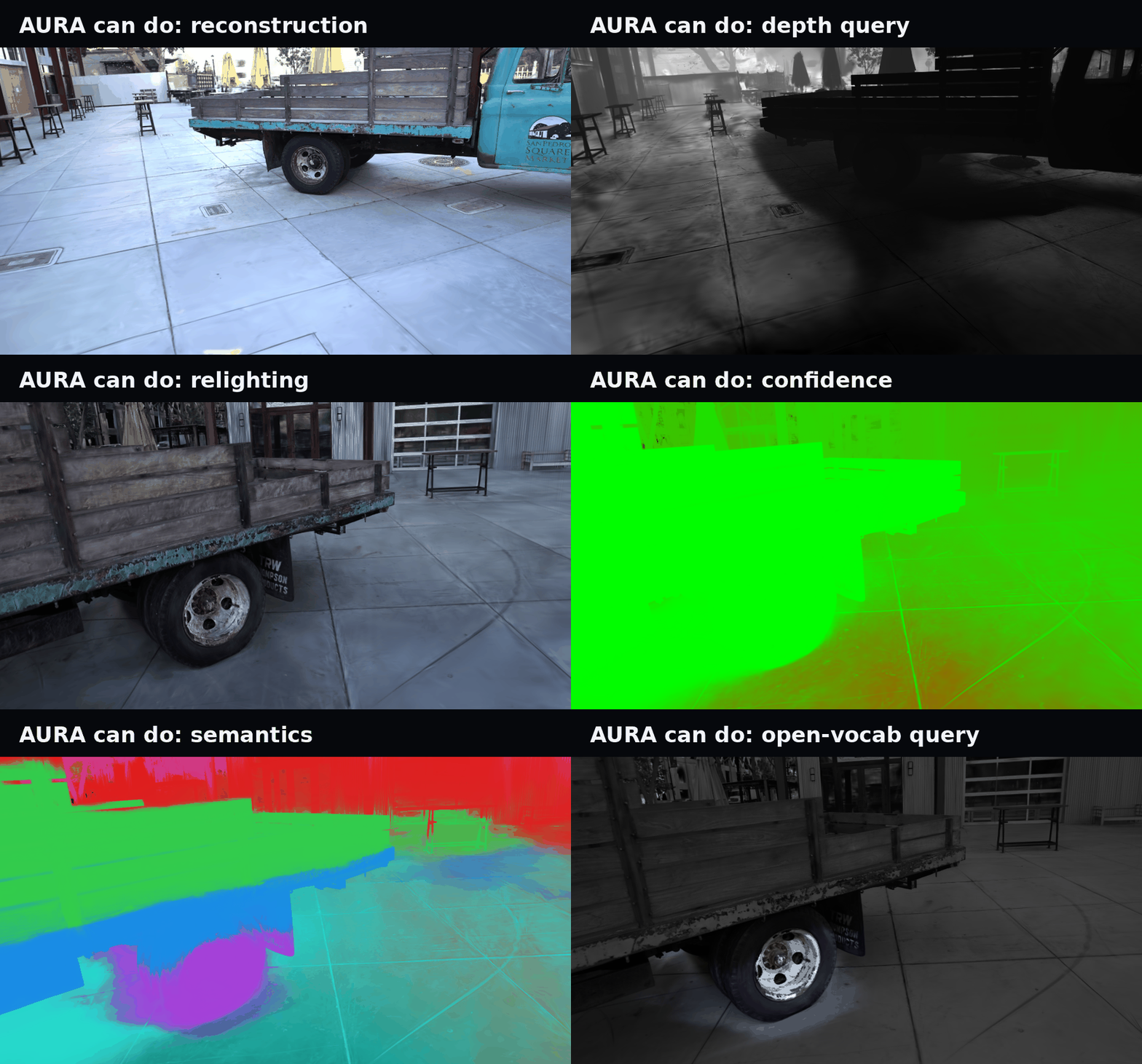
A plain 3DGS/DBS checkpoint renders fast but ships no notion of per-primitive trust. AURA keeps those fast Gaussian / DBS-Beta renderers where they are strong and adds the layer they do not provide: a calibrated confidence every carrier carries, turned into a distribution-free certificate, turned into a certified streaming/LOD ladder — with that confidence travelling in every standard container (glTF, USD, SPZ), all of it gate-checked and CPU-reproducible.
The chain is Photogrammetry → NeRF → 3DGS → AURA: not a faster renderer, but a more trustworthy, inspectable asset on top of one.
Install
Then follow Quickstart: fetch a scene, train carriers, render, export, ray-query.
Evidence (v1.1.0)
| Area | Result |
|---|---|
| Full suite | 1928 passed, 37 skipped, 0 failed — CPU-reproducible |
| Certificate bounds | 16/16 split-conformal bounds hold |
| LOD ladder | Certified streaming ladder with calibrated per-carrier confidence |
| Interchange | Confidence survives glTF, USD (primvars:aura:confidence), SPZ round-trips |
| Open artifacts | DOI 10.5281/zenodo.21500723 · REPRODUCE.md replays the paper with no data or GPU |
Scope (honest bounds)
No official-leaderboard SOTA claim anywhere in this repo. Open items are stated as open: a full 8-scene true-3DGS control, external reproduction, and a handful of demo-stage carriers. Negatives are kept, not hidden.
Guides
Start with Quickstart, then read the passes in order: calibrated confidence → distortion budget → cross-scene → full-res render loss → certified LOD → BVH ray query → carrier registry → relight decision.
Related
- SplatReg — register and merge 3DGS scans (sibling 3DGS project)
- Research portfolio — the full certified-systems map
- Code · Release v1.1.0 · PyPI